
"rare Robusta"
1000 article(s) found

What is suitable for washing Royal Robusta Coffee in India? is Royal Robusta Coffee good?
Professional coffee knowledge exchange more coffee bean information Please pay attention to the coffee workshop (Wechat official account cafe_style) India has always been one of the most important and special coffee producing countries in the East. In addition to the famous wind-soiled Farmabar coffee beans, India also produces many high-quality alpine Arabica manor-grade beans, as well as rare and exquisite planting, Robbs.
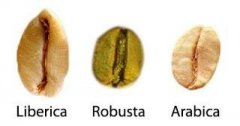
Lilika Coffee, a big seed in the coffee world. Why is Liberika so rare?
Professional coffee knowledge exchange more coffee bean information Please follow the coffee workshop (Wechat official account cafe_style) friends who have some knowledge of coffee should know that coffee beans are divided into three main categories: Arabica of small seed, Robusta of medium seed and Liberica of large seed, while we

Classification of coffee varieties Arabica bean and Robusta species
Arabica bean coffee trees can be divided into two main varieties: Arabica (Coffea Arabica) and Robusta (Coffea Robusta/Coffea Canephora). There are also some minor species, such as the Liberian species (Coffea Liberica) and the Alabasta species (Coffea Arabusta), but they are rare on the market. Robustadou

Characteristics of Robusta Coffee Grinding method introduction of Fine Coffee beans in producing areas
"Robusta" coffee usually has an ordinary, rigid and pungent flavor, and because the vast majority of Robusta coffee in the world is planted in low altitude areas (author's note: as of May 2008, only India planted rare high-altitude, high-quality, washed Robusta coffee beans). The flavor produced by different regions and different climates is not very different, there is a lack of.

West Java Coffee Bean Varieties with Rich Flavor
At present, 90% of coffee beans exported from Indonesia are Robusta beans and only 10% are Arabica beans. Before 1920, due to a major environmental disaster, Indonesia's coffee varieties were replaced by Robusta beans. Therefore, Sumatra's Mantenin coffee is a rare Arabica bean, which is a treasure before the discovery of Blue Mountain. Such genuine production is also very small

How to tell the robusta coffee beans?
Following Cafe (official Wechat account vdailycom) found that robusta coffee, a small shop of its own, usually has a mediocre, rigid and pungent flavor, and because the vast majority of robusta in the world are planted in low altitude areas (author's note: as of May 2008, only Robbins with high altitude, high quality and washing treatment is rarely planted in India.

Arabica and Robusta coffee beans versus Arabica and Robusta coffee flavors
Professional coffee knowledge exchange More coffee bean information Please pay attention to coffee workshop (Weixin Official Accounts cafe_style) You will often encounter coffee farmers and producers boasting that their products are 100% Arabica coffee. Even if it doesn't mean anything to you personally, you probably know that the Arabica label is seen as a sign of something different. In contrast, you rarely

A brief introduction to the cultivation of boutique coffee beans in West Java, Indonesia, geographical location, climate and altitude
At present, 90% of the coffee beans exported from Indonesia are Robusta beans, and only 10% are Arabica. Before 1920, due to a major environmental disaster, Indonesian coffee varieties were replaced with Robusta beans, so Mandarin coffee in Sumatra is a rare Arabica bean, a treasure before it was discovered in the Blue Mountains. The output of such authentic products is also very small.

A brief introduction to the treatment method of grinding degree and baking degree of Indonesian West Java boutique coffee beans with strong flavor
At present, 90% of the coffee beans exported from Indonesia are Robusta beans, and only 10% are Arabica. Before 1920, due to a major environmental disaster, Indonesian coffee varieties were replaced with Robusta beans, so Mandarin coffee in Sumatra is a rare Arabica bean, a treasure before it was discovered in the Blue Mountains. The output of such authentic products is also very small.

The origin and development of Indonesian West Java coffee beans
Java coffee planting environment and the main producing area Robusta (Robusta) is a low-land cultivation, high temperature resistance, drought resistance, rain, pests, adaptability is very strong, in the flat can grow very well, harvest does not necessarily need manual, can be completely carried out with vibration machines. Robusta coffee, which is commonly used in blending, has two main types: A. P. Robusta and W.I.B.Robu.

The two main types of coffee trees
Arabica bean coffee trees can be divided into two main varieties: Arabica (Coffea Arabica) and Robusta (Coffea Robusta/Coffea Canephora). In addition, there are some minor species, such as Coffea Liberica and Coffea Arabusta, but they are rare on the market. Rob, Stadou, Rob.

A brief introduction to the flavor, taste and aroma characteristics of boutique coffee beans in West Java, Indonesia.
Java produces only a small amount of Arabica beans, most of which were imported from Africa after the rust disaster. This kind of coffee has a strong bitter taste after roasting, but the aroma is extremely light. Although it has low acidity and delicate taste, it is rarely used for direct drinking. It is often used to mix mixed coffee, or to make instant coffee. Java coffee is produced in Java, Indonesia, and belongs to Elaraby.

A brief introduction to the flavor, taste and aroma characteristics of boutique coffee beans in West Java, Indonesia.
Java produces only a small amount of Arabica beans, most of which were imported from Africa after the rust disaster. This kind of coffee has a strong bitter taste after roasting, but the aroma is extremely light. Although it has low acidity and delicate taste, it is rarely used for direct drinking. It is often used to mix mixed coffee, or to make instant coffee. Java coffee is produced in Java, Indonesia, and belongs to Elaraby.
A brief introduction to the Origin, Development, History and Culture of Fine Coffee beans in West Java, Indonesia
Java produces only a small amount of Arabica beans, most of which were imported from Africa after the rust disaster. This kind of coffee has a strong bitter taste after roasting, but the aroma is extremely light. Although it has low acidity and delicate taste, it is rarely used for direct drinking. It is often used to mix mixed coffee, or to make instant coffee. Java coffee is produced in Java, Indonesia, and belongs to Elaraby.

A brief introduction to the Market Price of High-quality and pollution-free Ugandan Fine Coffee Bean varieties
Uganda is the country of origin of coffee grown in Robusta, but commercial cultivation of Arabica species here did not begin until early 1900. Today, there are still a large number of wild robusta coffee trees in Uganda, which is rare in cities in the world. As a landlocked country, the large coffee cultivation in Uganda is often interplanted, where coffee trees are mixed with food crops and rubber trees.
What are the derived varieties of Robusta coffee beans? What are the planting advantages of Robusta coffee beans?
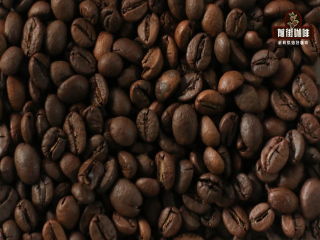
Professional coffee knowledge exchange more coffee bean information please follow the coffee workshop (Wechat official account cafe_style) what are the derivative varieties of robusta coffee beans? What are the advantages and characteristics of robusta coffee beans? In terms of shape, Arabica beans are long and flat, with an S-curve in the central line, Rob.

A brief introduction to the flavor, taste and aroma characteristics of Ugandan boutique coffee beans with unique flavor
Uganda is the country of origin of coffee grown in Robusta, but commercial cultivation of Arabica species here did not begin until early 1900. Today, there are still a large number of wild robusta coffee trees in Uganda, which is rare in cities in the world. As a landlocked country, the large coffee cultivation in Uganda is often interplanted, where coffee trees are mixed with food crops and rubber trees.

Introduction to the production area of Grinding scale for Coffee planting and Flavor description treatment
Coffee planting and treatment Flavor description treatment Grinding scale production area introduction Coffee trees can be divided into two main varieties: Arabica (Arabica) and Robusta (Robusta). There are also some minor species, such as the Liberian species (Liberica) and the Alabasta species (Arabusta), but they are rare on the market. Although Arabica and Roberta are extensive,

A brief introduction to the market price of boutique coffee beans with low acidity in West Java, Indonesia
Java coffee growing environment and main producing area Robusta belongs to lowland cultivation, which is resistant to high temperature, drought, rain, insect pests and strong adaptability. it can grow very well on flat land, and the harvest does not necessarily need manual work, but can be carried out completely by vibration machine. There are two kinds of Robusta coffee that we often come into contact with: A.P.Robusta and W.I.B.Robu.